

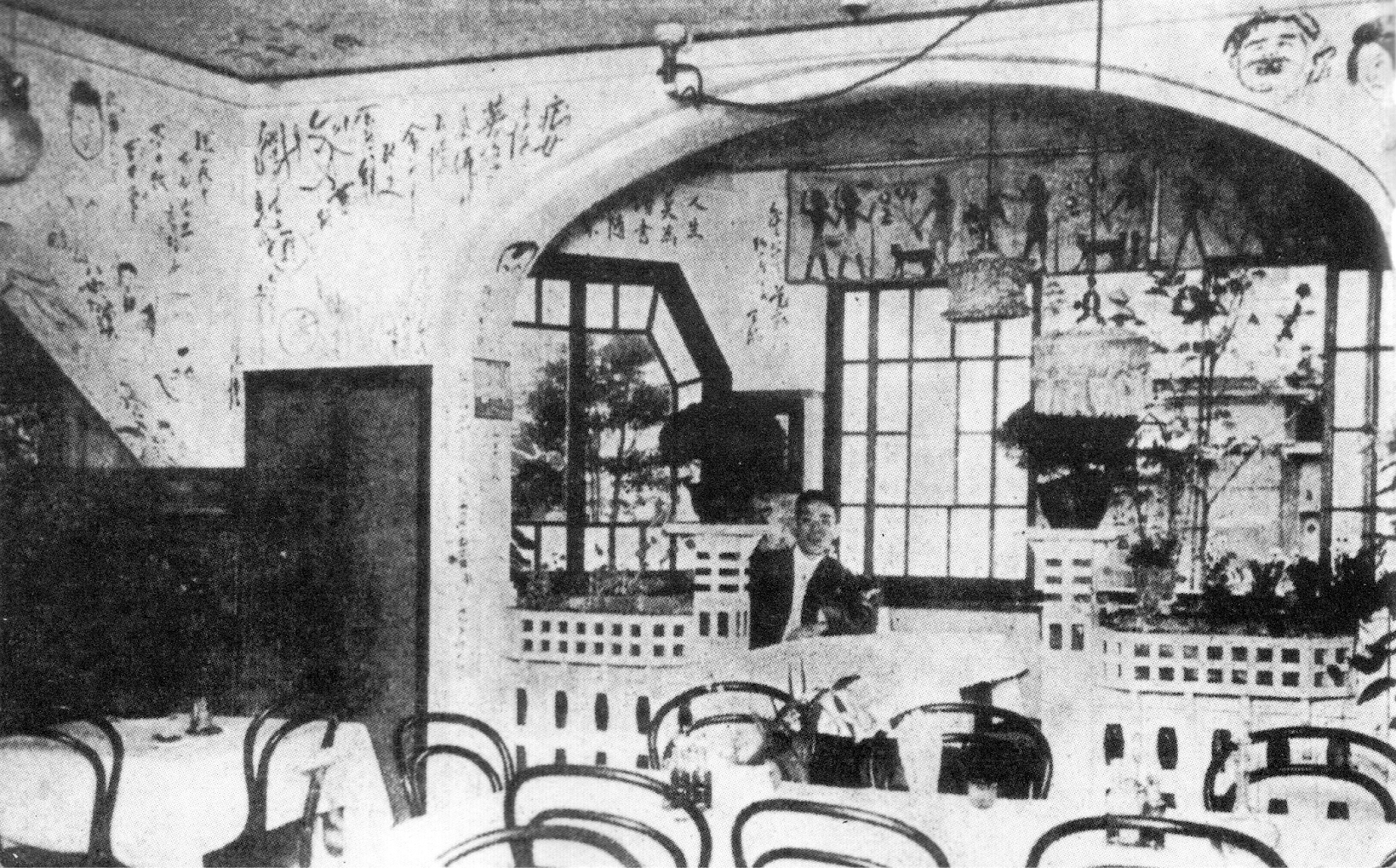
While Mizuno Ryo’s Café Paulista was slamming down the hammer of big caffeine capitalist chain conformity, plenty of hipster independent coffeehouses popped up in early 20th century Tokyo. Let’s explore three of the most famous: Purantan, Lion, and Tiger.
Purantan
Matsuyama Shōzō 松山 省三 was a painter in the newfangled Western style, and he wanted a place to meet with like-minded people to discuss art, drink overpriced frappuccinos, and argue over the correct way to pronounce “croissant.” In 1911, probably beating Café Paulista by only a few months, he opened the first place in Tokyo to do an innovative thing: it used the word “café” in its name. Kafē Purantan was a katakana version of either Café Printemps or Café Plantain.
Matsuyama was inspired by Parisian cafés of the time, especially Le Procope. These places were like cozy bistros, with food, wine, coffee, and a lot of arguing about art, philosophy, and whether subs or dubs are superior. Subs, obviously.
Western food and drink were still novelties, so Purantan’s customers were progressive students and intellectuals. The first six months Kafē Purantan was an exclusive salon, with about 35 members, all writers, artists, critics, and politicians. Even after the membership requirement was dropped, Purantan kept its artsy intellectual vibe.
The waitresses at Purantan were elegant and beautiful. One 1930s Japanese writer described them as “the noble virgin type.” While Purantan kept its elegant, virginal image, not all places were quite so chaste.
Lion
Before there were cat cafés for you to pet kittens and enjoy your allergies, there were big-cat cafés for you to fondle waitresses allergy-free.
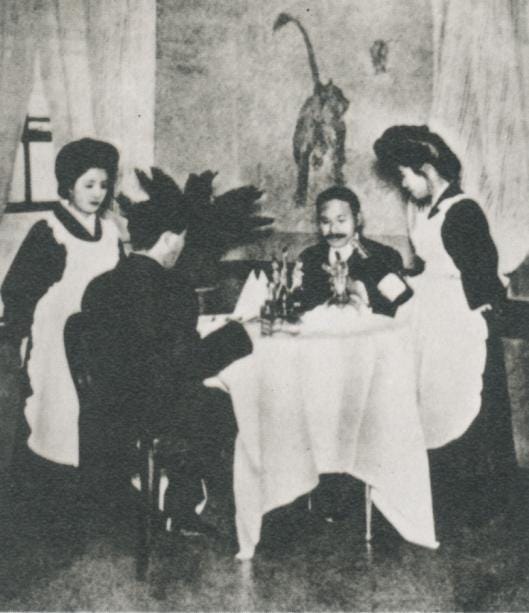
Kafē Raion (Café Lion) roared to life in Ginza, also in 1911, and focused more on entertainment and less on discussions of high art and philosophy. Lion was owned by the same people who had opened the first Western-style hotel and restaurant in Tokyo in 1872, and it was known for its juicy steaks, which cost 50 sen (ten cups of coffee at Café Paulista!).
It was housed in a huge, modern building of three floors, and included a bar, dining rooms with singing geisha, and the exciting choice of Japanese or Western toilets in the restrooms. A hundred years ago the Japanese were excited to try a Western toilet A hundred years ago the Japanese were excited to try a Western toilet, whereas these days they go around poo-pooing them.
Tiger
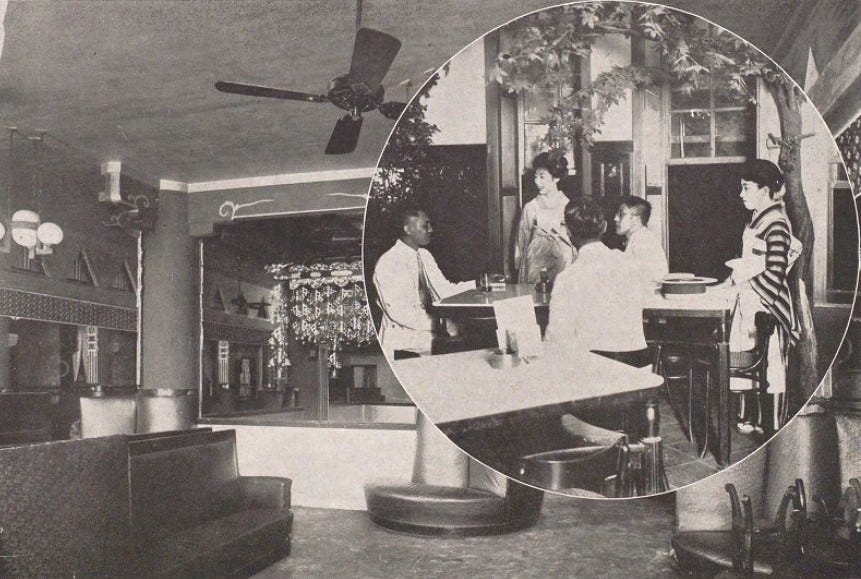
In 1923, everybody got shook, and half of Tokyo was destroyed. During the rebuilding, many new cafés sprung up. One was Kafē Taigā (Café Tiger), which pounced onto the scene in 1924. It was a somewhat sexier version of Café Lion, and right across the street. A copycat. Coffeecat? Waitresses who were fired from Lion for “misbehaving” (let your imagination run wild) were promptly hired at Tiger.
Lion and Tiger were famous enough that they were mentioned in a 1928 pop song, Today’s Ginza Festival. The first line of the third verse is:
東京銀座は怖ろし所 虎と獅子とが酌に出る
Tokyo’s Ginza is a scary place where tigers and lions come out to serve drinks
Song Tangent
I promised you the history of coffee, but psych! Now you’ll have to suffer through some history of recording and linguistics because I find it interesting. I’m a fickle and sadistic sensei.
Before Spotify, humanity had to endure 78 RPM records which could only hold about 3 minutes to a side, so longer songs would be split up into two parts, and you’d have to flip the record over in the middle. In the snow, uphill, both ways. Here’s a 1928 recording by Satō Chiyako 佐藤千夜子 of Today’s Ginza Festival 當世銀座節. The Tiger & Lion line is the first one in the third verse, at 0:31–0:33 in the second video.
Now for three short lessons in linguistics.
First, if you listened carefully to that line, you might have been confused, since it sure doesn’t sound like she’s saying “taigā to raion” (“tiger and lion”). You’d be correct. She’s actually saying “tora to shī,” which are the native Japanese words for tiger and lion. In modern Japanese you’re more likely to hear raion than shī for lion, though tora is still the standard word for tiger.
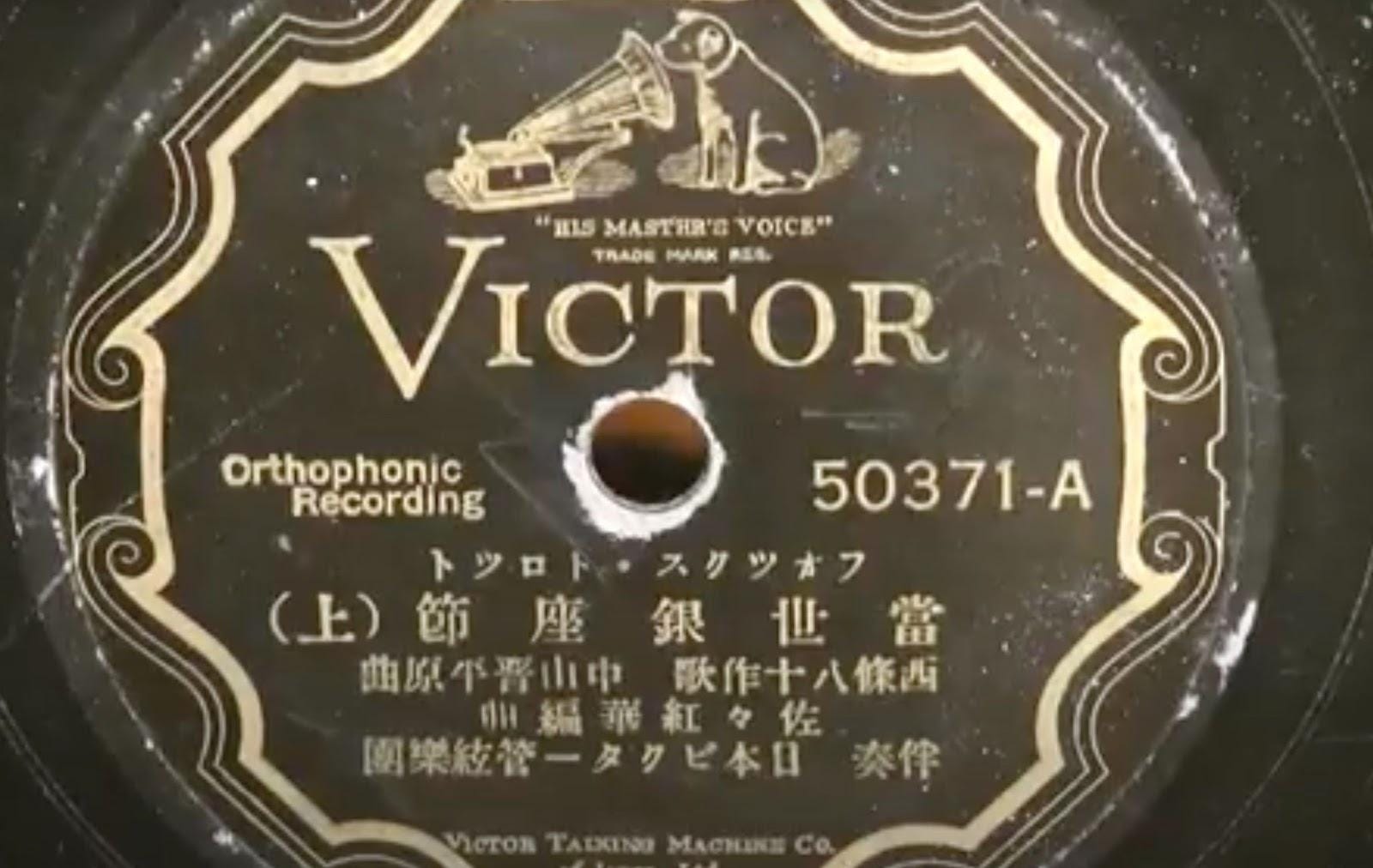
Second, the first character in the song’s title (當) is old-fashioned and was simplified in the script reform of 1946. If you want to find the song on a modern streaming service, you’ll want to search for this instead: 当世銀座節.
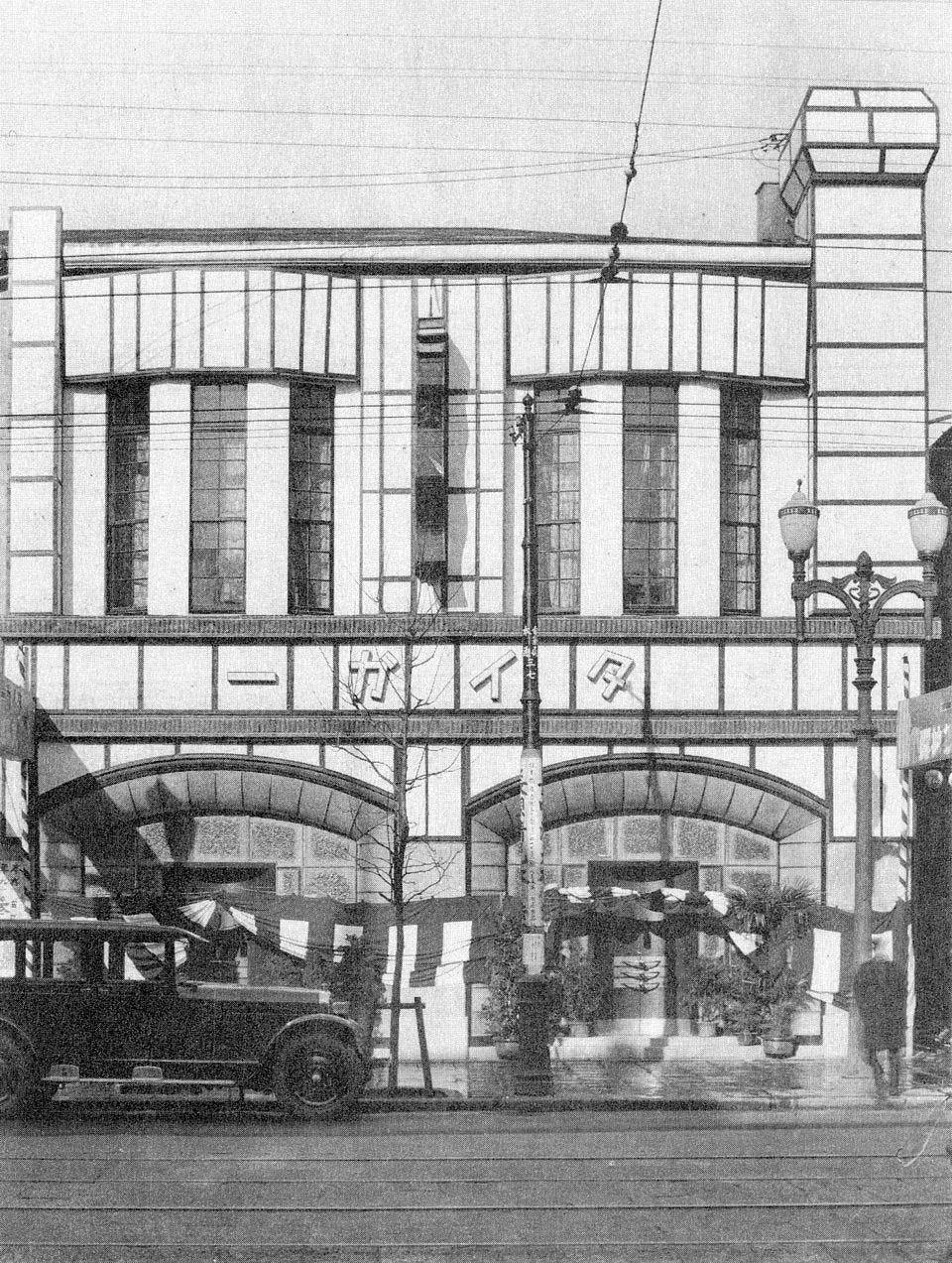
Finally, the song’s title is of course the old-fashioned 當世銀座節 on the record label...but written from right to left. Classical Japanese was written vertically, with columns read top to bottom and right to left. When written horizontally due to space constraints, like on a horizontal shop sign or above a temple gate, it was always read from right to left. Only later in the 20th century did the left-to-right horizontal direction become the standard. You can see the same right-to-left archaic business in the picture below on the big sign on the front of Café Tiger where it says Taigā タイガー (katakana ta-i-ga and a horizontal line to lengthen the last vowel). Delightfully olde timey!
Next article: Sexy coffee maids!


References
White, Merry I. Coffee Life in Japan. University of California Press, 2012.
Seidensticker, Edward. Low City, High City: Tokyo from Edo to the Earthquake. Penguin, 1985.
Seidensticker, Edward. Tokyo Rising: The City Since the Great Earthquake. Harvard UP, 1991.
Tipton, Elise K. “The Café: Contested Space of Modernity in Interwar Japan” in Being Modern in Japan: Culture and Society from the 1910s to the 1930s, U of Hawaiʻi, 2000, pp. 119–136.
Fukuda, Ikuhiro. “La transformation des pratiques et des sensibilités alimentaires après le désastre de 1923.” Géographie et cultures, Vol. 86, 2013, pp. 13–29. (in French) https://doi.org/10.4000/gc.2809
I can’t wait for the day when the Dragon Quest bunny girls tie-in shows up. I know where those started (eew) but why are there bunny girls in all these games??